Start with the outcome the website needs to support
The cost of a website redesign depends on the work it needs to do. Two sites with a similar number of pages can involve very different content, design, interactions and operational connections.
For a London business comparing proposals, the useful question is what each scope includes and what the team will need to contribute. A clear comparison looks at the intended customer journey and the work behind it.
The main areas of effort
A practical brief makes these areas visible before they become assumptions in a quotation.
- Discovery: audiences, priorities, existing processes and stakeholder decisions.
- Content: message, page structure, writing, editing and reusable templates.
- Design: visual direction, key journeys, responsive detail and review rounds.
- Development: publishing tools, forms, interactive features and integrations.
- Migration: existing URLs, copy, assets, redirects and data that need to carry over.
- Release: acceptance checks, training or handover, deployment and monitoring.
A brand website and a customer platform have different boundaries
A focused product website may have a clear content hierarchy, a small set of carefully designed templates and an enquiry journey. A supplier-fed catalogue can also need product imports, pricing rules, customer accounts and quotation workflows.
Both can present a simple experience to the visitor. The second carries more application behaviour behind it, which needs to be specified, built and tested. Naming that behaviour makes a proposal easier to assess.
Decide where bespoke design will make the difference
Visual exploration, custom components and detailed journey mapping take time. They can be valuable where a distinctive brand or an unusual workflow needs careful expression. A more focused first release can use a smaller template set and familiar patterns.
That is a scope decision. Content ownership, responsive behaviour, permissions and essential validation still need a sound implementation. We separate optional design effort from the foundations that make the website dependable.
Existing content can help, if it is ready to use
A content review establishes what is current, who can approve it and which pages need new material. It also identifies assets that need replacing and areas where a previous website contains useful knowledge.
Unresolved wording, unavailable images and late changes to page structure can affect the delivery plan. An agreed content owner and review rhythm make those decisions easier to schedule.
Make the commercial proposal comparable
We define a total project scope and cost around the agreed requirements, with assumptions stated plainly. If requirements change, the effect can be discussed before the extra work is undertaken.
Ongoing hosting, support and future enhancement are separate decisions about the operating service. They should have a defined purpose, coverage and review process. This guide does not offer a universal price band because it would hide the differences described above.
- Which journeys and templates are included?
- Who supplies and approves content?
- Which migrations and integrations are covered?
- How are feedback, testing and acceptance handled?
- What is included at handover, and what continues afterwards?
Use a real project to understand the approach
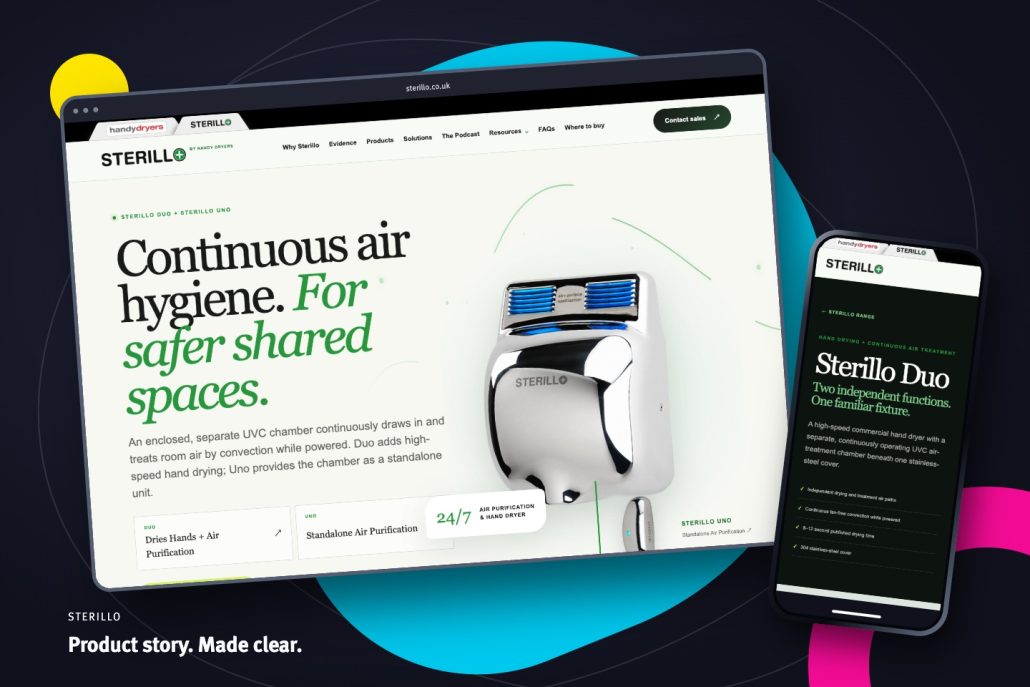
Sterillo needed a distinct product presence and a delivery cadence aligned with planned marketing. Four weeks suited that particular brief, with planning and client review included. It provides context for the approach, rather than a price or schedule promise for every website.
Bring an existing website, a few customer actions and any known connections to the first conversation. We can use those examples to shape a scope that is concrete enough to compare and approve.